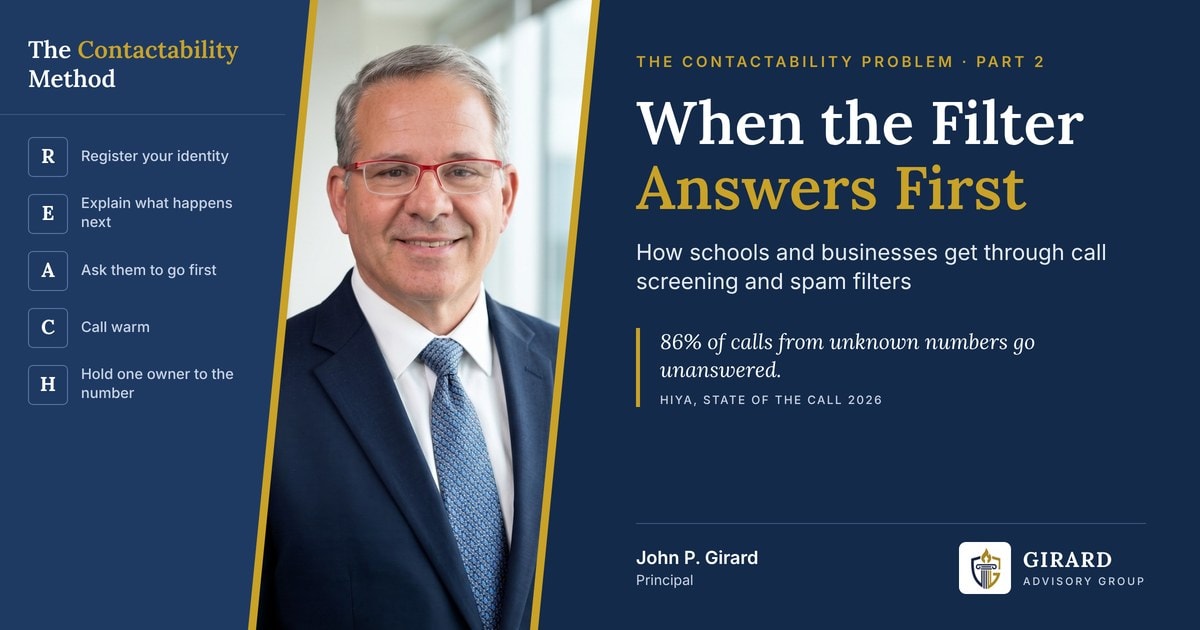
The Contactability Problem, Part 2: When the Filter Answers First

John P. Girard
Founder, Girard Advisory Group
86% of calls from unknown numbers go unanswered. Before a prospect ever sees your call, text, or email, a filter has already judged it. This post covers what changed — and introduces the five-step Contactability Method for getting through.
When I wrote The Contactability Problem, the argument was simple. Most inquiries that go cold were never bad leads. Nobody reached them in time, on a channel they would answer.
That is still true. What has changed is who decides whether you get through.
It used to be the prospect. Now, before a person ever sees your call, text or email, a filter has already judged it. The carrier scores your phone number. The phone asks you to state your business. The text lands in a folder that makes no sound. The inbox rejects mail that cannot prove where it came from.
None of this was aimed at schools or honest businesses. It was built to stop fraud, and it works. But it catches legitimate outreach every day, and the organizations it catches rarely know. The call log says “no answer.” The text platform says “sent.” The lead gets marked unresponsive.
Hiya’s 2026 State of the Call report, a survey of more than 12,000 consumers in six countries, found that 86% of calls from unknown numbers go unanswered. If your follow-up plan still starts with a cold call from a number the prospect has never seen, that is the wall you are calling into.
This post covers what changed, then introduces the Contactability Method: five steps schools and businesses are using to reach the people who asked to hear from them.
What changed: four filters between you and the prospect
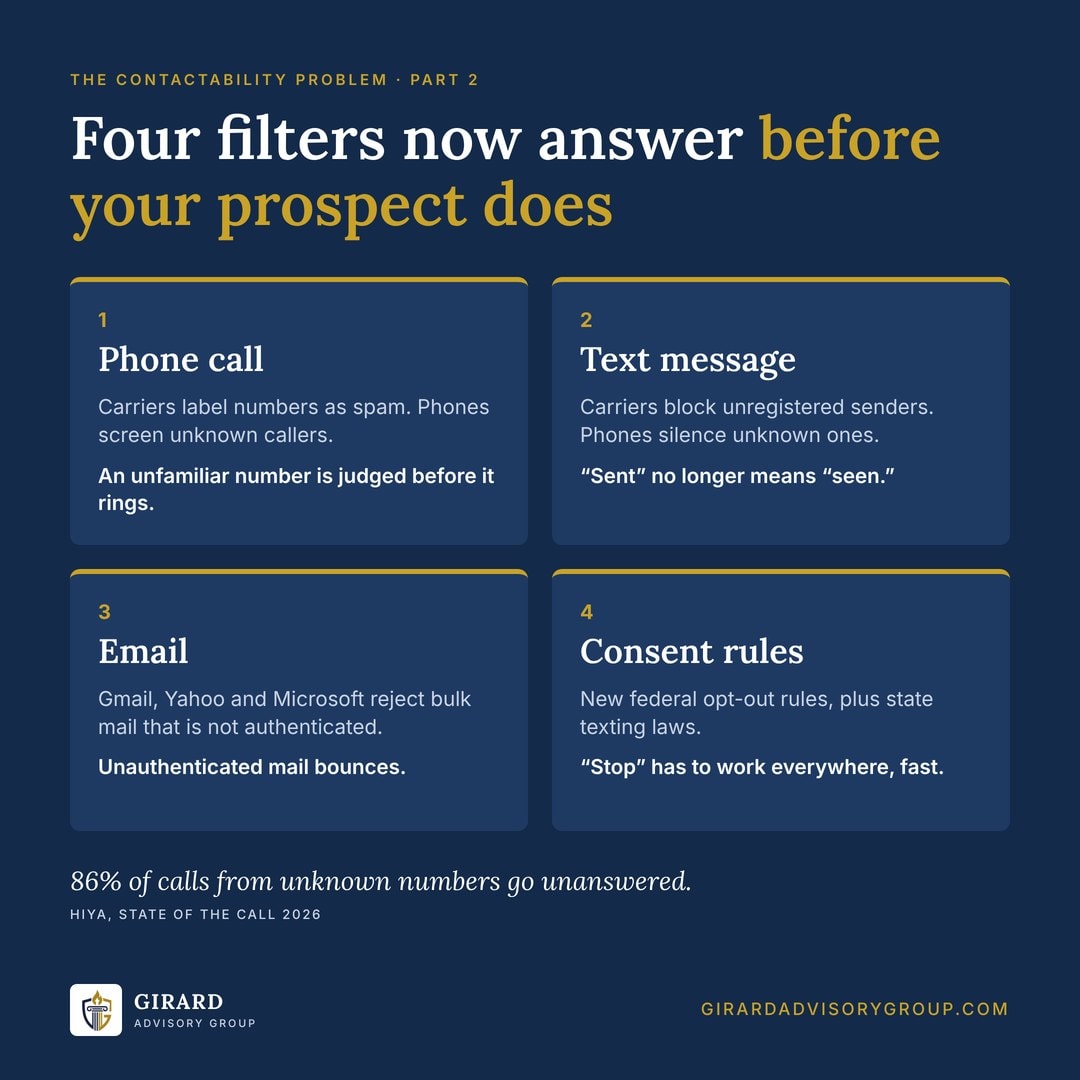
| Channel | What changed | What it means for you |
|---|---|---|
| Phone call | Carriers label numbers as spam; iPhones can now screen unknown callers | An unfamiliar number is judged before it rings |
| Text message | Carriers block unregistered business texting; phones sort unknown senders into a silent folder | “Sent” no longer means “seen” |
| Gmail, Yahoo and Microsoft reject bulk mail that is not authenticated | Unauthenticated mail bounces instead of landing in spam | |
| Consent rules | New federal opt-out rules take effect Nov. 25, 2026; states are adding their own texting laws | “Stop” has to work everywhere, fast |
The phone call
Two separate systems now judge a call. The first is the carrier. Each major carrier uses an analytics partner to score calling numbers and decide which ones get a “Spam Likely” or “Scam Risk” label. The score is based on behavior: how many calls a number makes, how many are answered, how long they last, and how often people block or report it. This creates a trap. A labeled number gets fewer answers, and fewer answers make the label stick.
The second is the phone itself. Apple’s iOS 26, released in September 2025, added a feature called Screen Unknown Callers. When a user turns it on, the phone answers an unknown call silently and asks the caller for a name and a reason for calling. Only then does it ring, with a transcript on the screen. “Unknown” means any number that is not in the person’s contacts and that they have not contacted first. The feature is off by default, so not every prospect uses it. Those who do are the people most tired of unwanted calls.
One detail matters for anyone buying a fix: branded caller ID helps, because your name shows during screening, but it does not bypass screening.
The text message
Texting was the workaround when calls stopped being answered. It now has gates of its own. Business texting from a standard ten-digit number requires registration, known as 10DLC, through The Campaign Registry. Since early 2025 the major carriers have blocked unregistered business texts outright. The sender is not told. The platform shows the message as sent.
Then comes the phone. iOS 26 can sort texts from unknown numbers into an Unknown Senders folder that shows a badge but makes no sound. A sender gets out of that folder when the person saves the contact, marks the number as known, texts first, or has replied several times.
The inbox
Google and Yahoo began requiring bulk senders to authenticate their mail in February 2024, and Microsoft followed in May 2025. A bulk sender is one sending about 5,000 or more messages a day to a provider. The requirements are SPF, DKIM and DMARC records that pass and align, a one-click unsubscribe, and a spam complaint rate kept below 0.3%. What changed more recently is the penalty. Mail that fails now gets rejected instead of quietly filed as spam. A school sending from several systems — a CRM, a student information system and a marketing platform — has to authenticate every one of them.
The consent rules
The FCC’s “one-to-one consent” rule for purchased leads was struck down by a federal appeals court in January 2025 and removed. Standard written consent rules still apply, and many carriers and texting platforms ask for seller-specific consent anyway. The FCC’s revised opt-out rules take effect Nov. 25, 2026. Callers may now designate how people opt out, including a text reply. If you use the text method, your system must recognize seven words: stop, quit, end, revoke, opt out, cancel and unsubscribe. The window to honor a request is still ten business days.
States are adding their own rules. Texas, for example, extended its telemarketing law to text messages in September 2025, including quiet hours of 9 a.m. to 9 p.m. Monday through Saturday and noon to 9 p.m. on Sunday. If you recruit or sell across state lines, have counsel review your calling and texting hours. This post is an operator’s summary, not legal advice.
The Contactability Method
Every filter described above asks the same question: is this sender known? The schools and businesses holding their contact rates have stopped trying to beat the filters. They work to become a known sender before the first call is placed. I call that approach the Contactability Method. It has five steps, and together they do what the name promises: they let you reach the people who asked to hear from you. It is the working method behind Delivery on First Contact, the last element of the TRUSTED Model and the one that decides whether the other six paid off.
| Step | The question it answers |
|---|---|
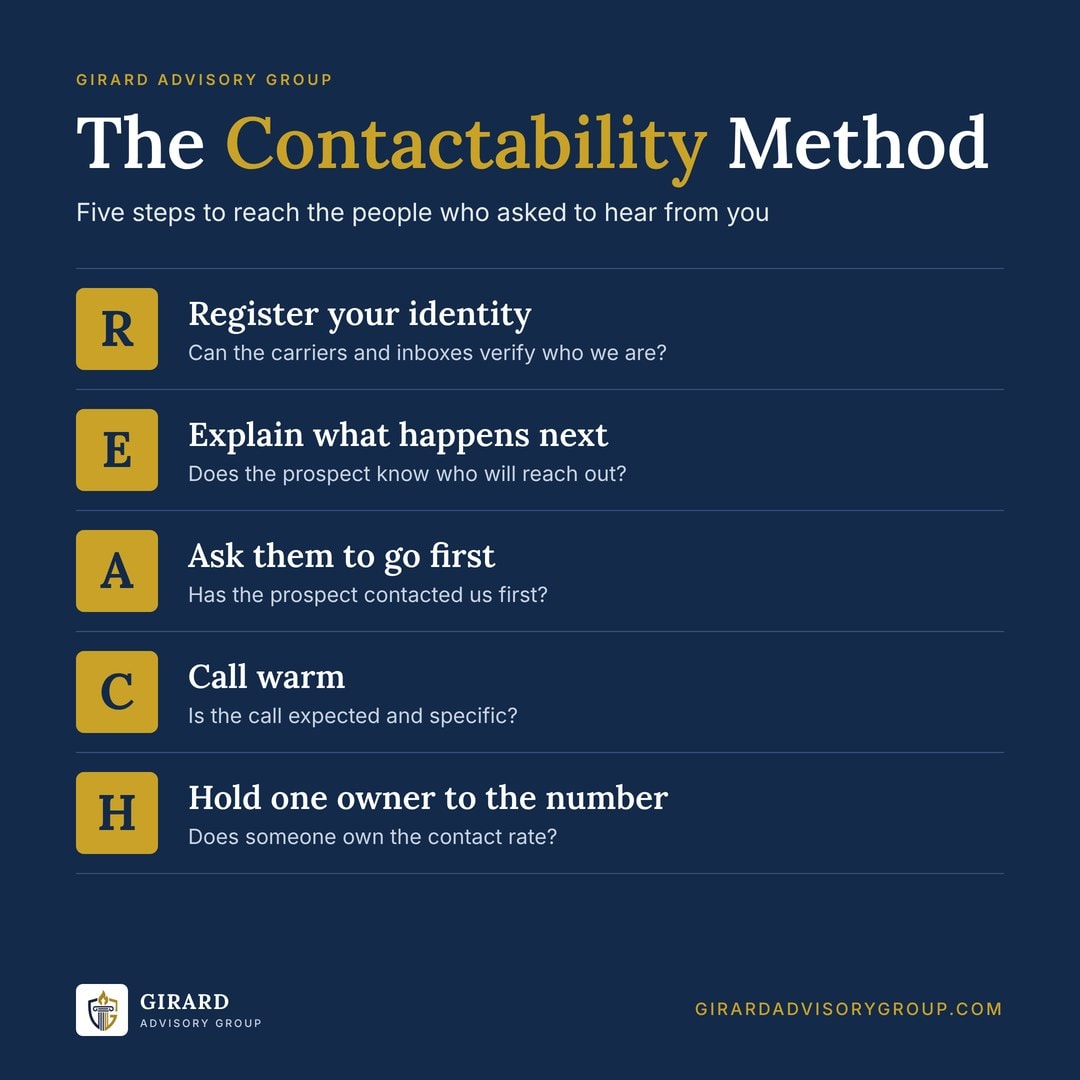
| Register your identity | Can the carriers and inboxes verify who we are? |
| Explain what happens next | Does the prospect know who will reach out? |
| Ask them to go first | Has the prospect contacted us first? |
| Call warm | Is the call expected and specific? |
| Hold one owner to the number | Does someone own the contact rate? |
The method is the same for a college returning an inquiry and a business returning a quote request. Sales teams felt the filters sooner, because their numbers place more calls, so many of the practices below started there.
Step 1: Register your identity
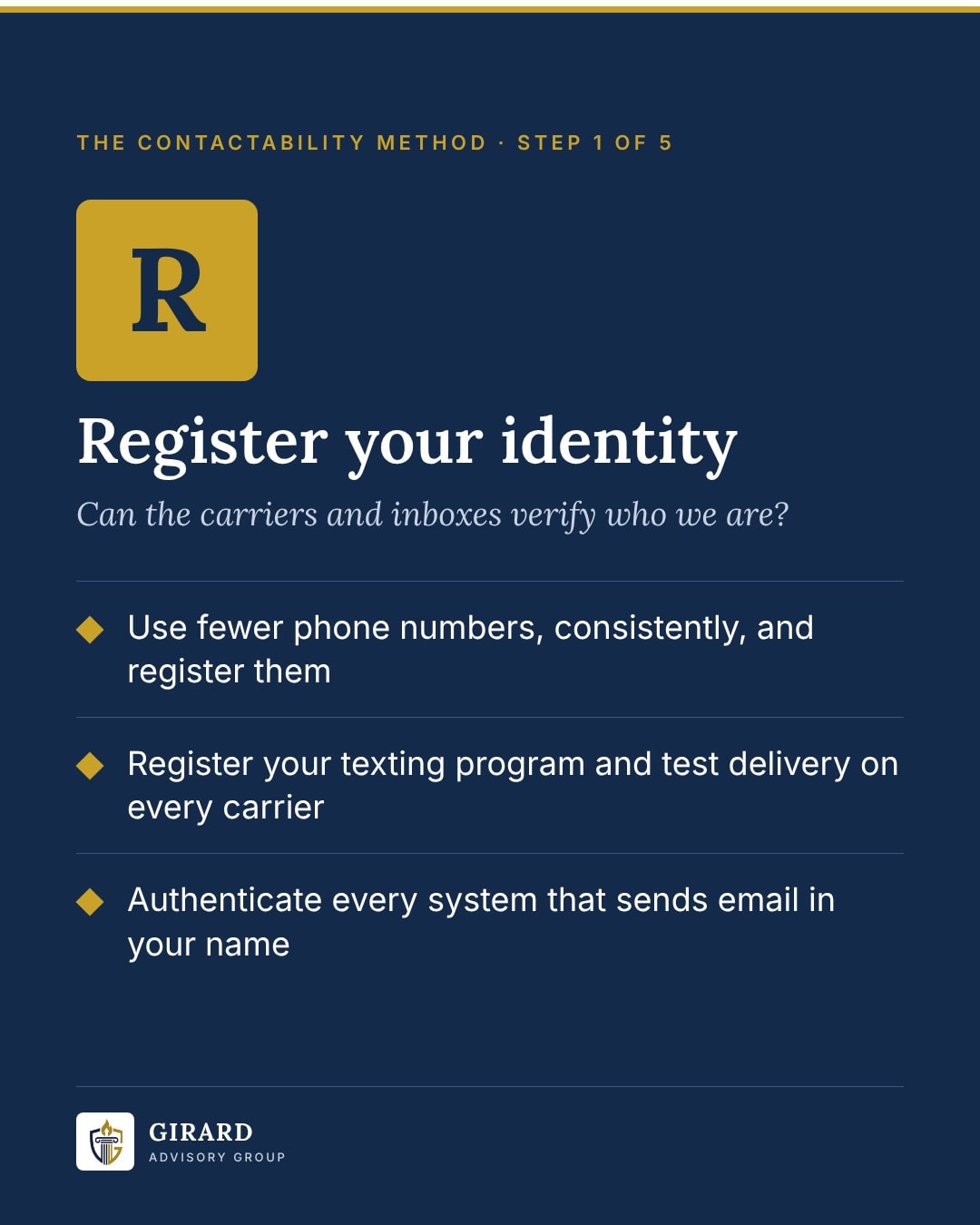
Before a prospect judges you, the network does. Treat phone numbers as assets. Use fewer numbers, use them consistently, register them with the carriers’ analytics providers, and check them for spam labels every month. The old habit of rotating through local numbers to look familiar now does damage, because each new number starts with no reputation and is burned quickly.
Stop using volume as the strategy. Dialing more to make up for a low answer rate is the fastest way to earn a spam label. Register the texting program and confirm with test messages that texts arrive on every major carrier. Authenticate every system that sends email in your name — for a school that often means a CRM, a student information system and a marketing platform. Consider branded calling. It puts your organization’s name on the screen. It does not guarantee an answer, but it removes a reason a legitimate call looks suspicious.
Step 2: Explain what happens next
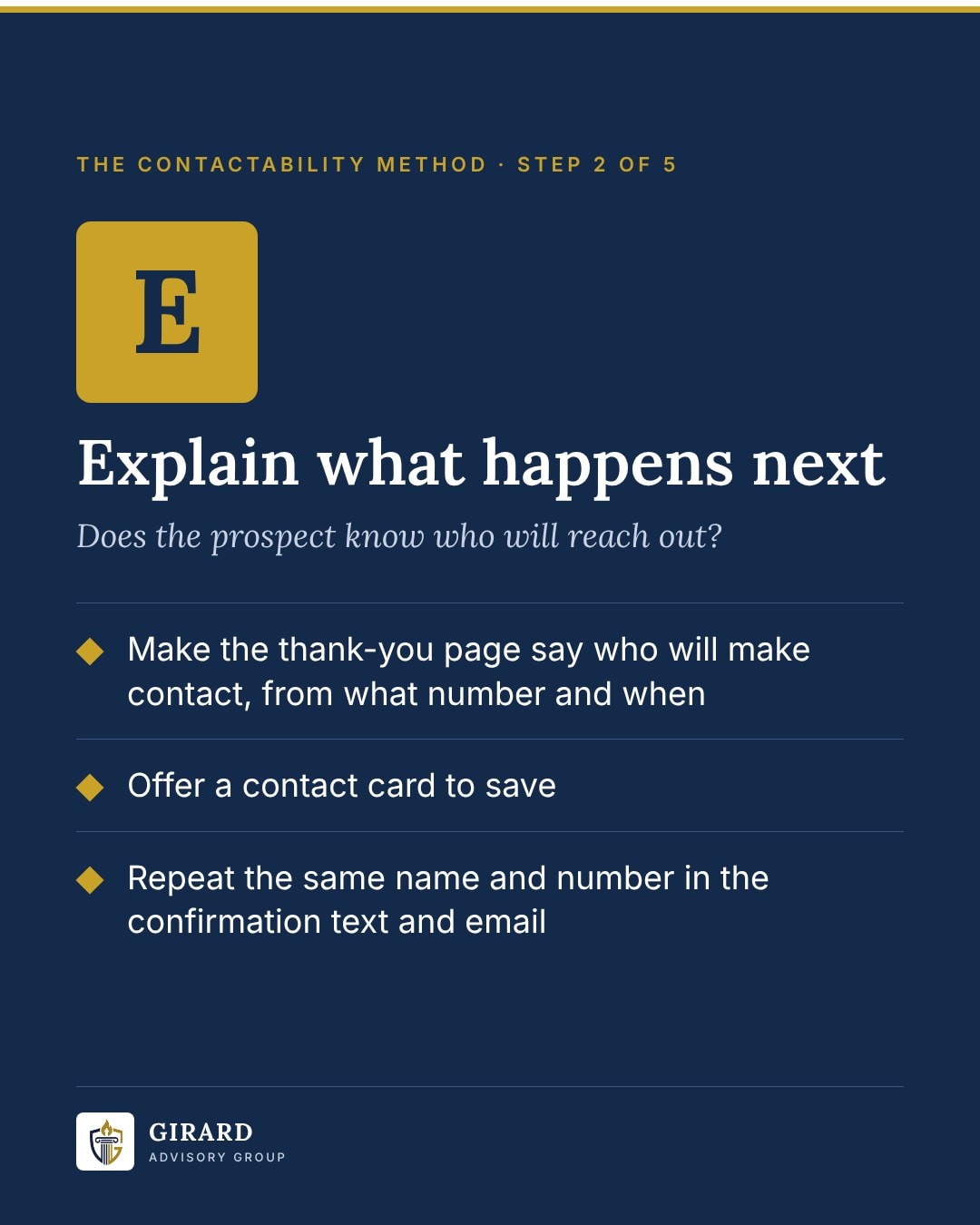
The moment after a form is submitted is the only time you have the prospect’s full attention. Use it to tell them exactly what happens next. Rewrite the thank-you page. Say who will make contact, from what number and when. “Maria from admissions will text you in the next five minutes from 216-555-0100” does more for contact rate than a new dialer. Offer a contact card. A saved number is a known number. It rings through, and its texts land in the main inbox. Repeat it in the confirmation email and text. Same name, same number, same promise.
Step 3: Ask them to go first
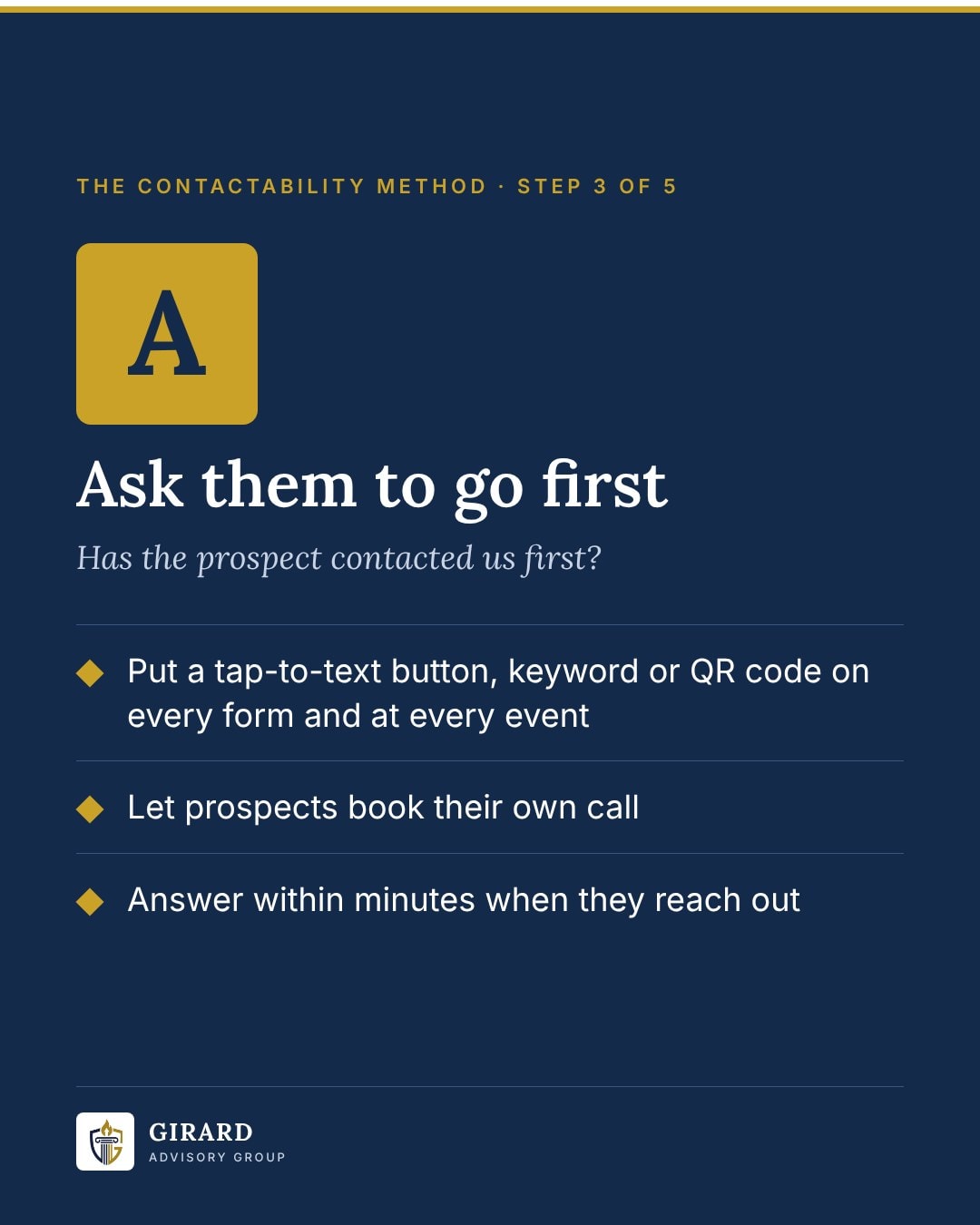
A number the prospect has texted or called is no longer “unknown” to their phone. Give every form and event a way to start the conversation: a tap-to-text button, a keyword to text, or a QR code at an open house or a job site. One message from the prospect opens the channel for everything that follows. Let them book the conversation. A scheduling link in the first text and email turns an interruption into an appointment. Answer fast when they do reach out. An inbound text that waits until morning wastes the opening the prospect just gave you.
Step 4: Call warm
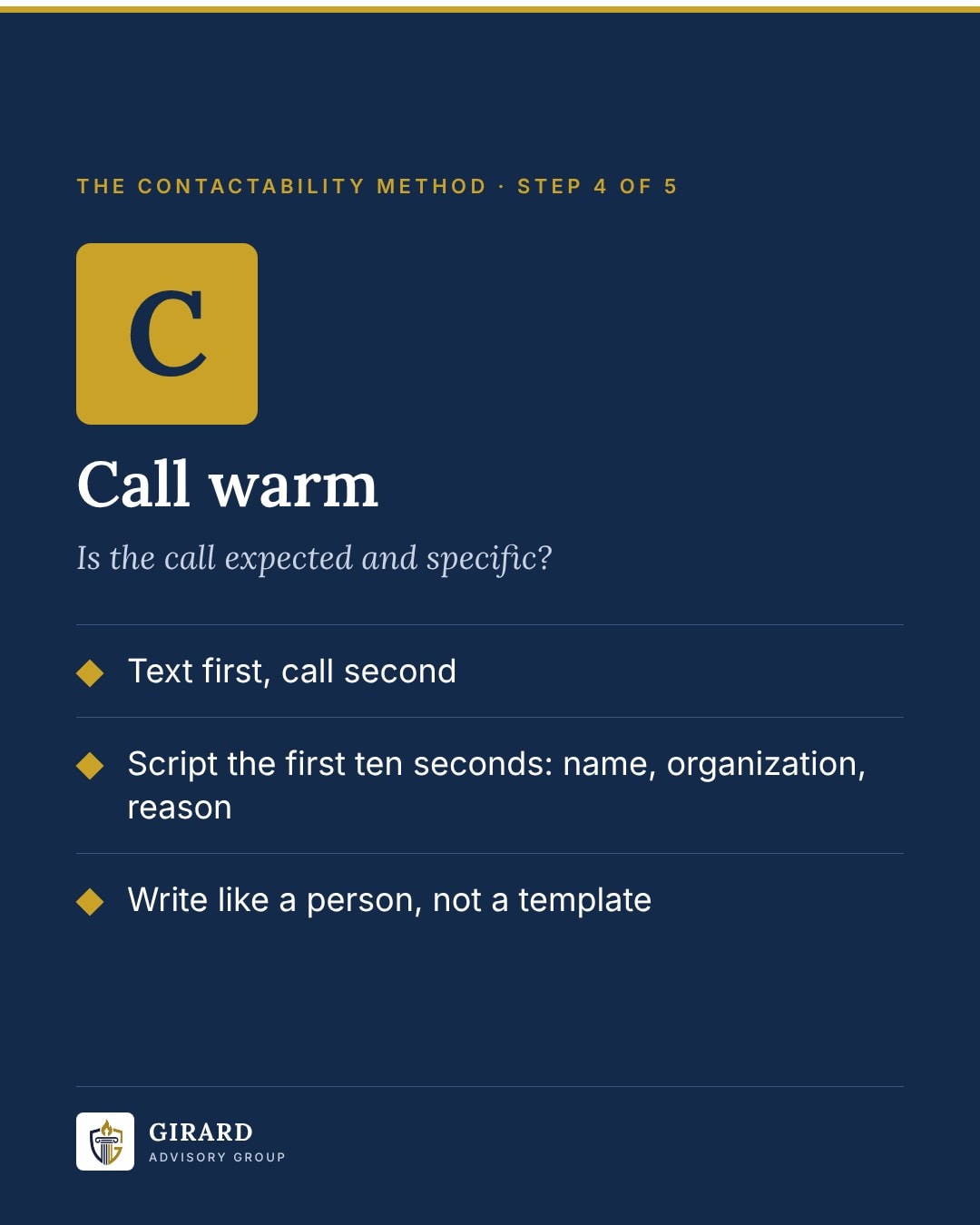
A conversation is still where an enrollment or a sale is decided. The call works when it is expected. Text first, call second. A short, personal text introduces the representative and says a call is coming and why. This was good practice when I wrote the first post. It is now close to required.
Script the first ten seconds for the screen. When a phone screens a call, the representative is speaking to software, and the prospect reads the transcript. Lead with a name, an organization and a specific reason: “This is Dana from Smith Roofing, calling about the estimate you asked for this morning.” A vague opener reads as a sales pitch and gets ignored. A clear one can get a call answered that would otherwise have been silenced.
Write like a person. The 2026 Enrollment Engagement Report found that 63% of students say generic outreach makes them less interested in a college, and 83% are more likely to take the next step when outreach feels personal. Respond in minutes, around the clock. Many teams now use automated or AI-assisted texting to answer an inquiry at 9 p.m. and hand a warm conversation to a person in the morning.
Step 5: Hold one owner to the number
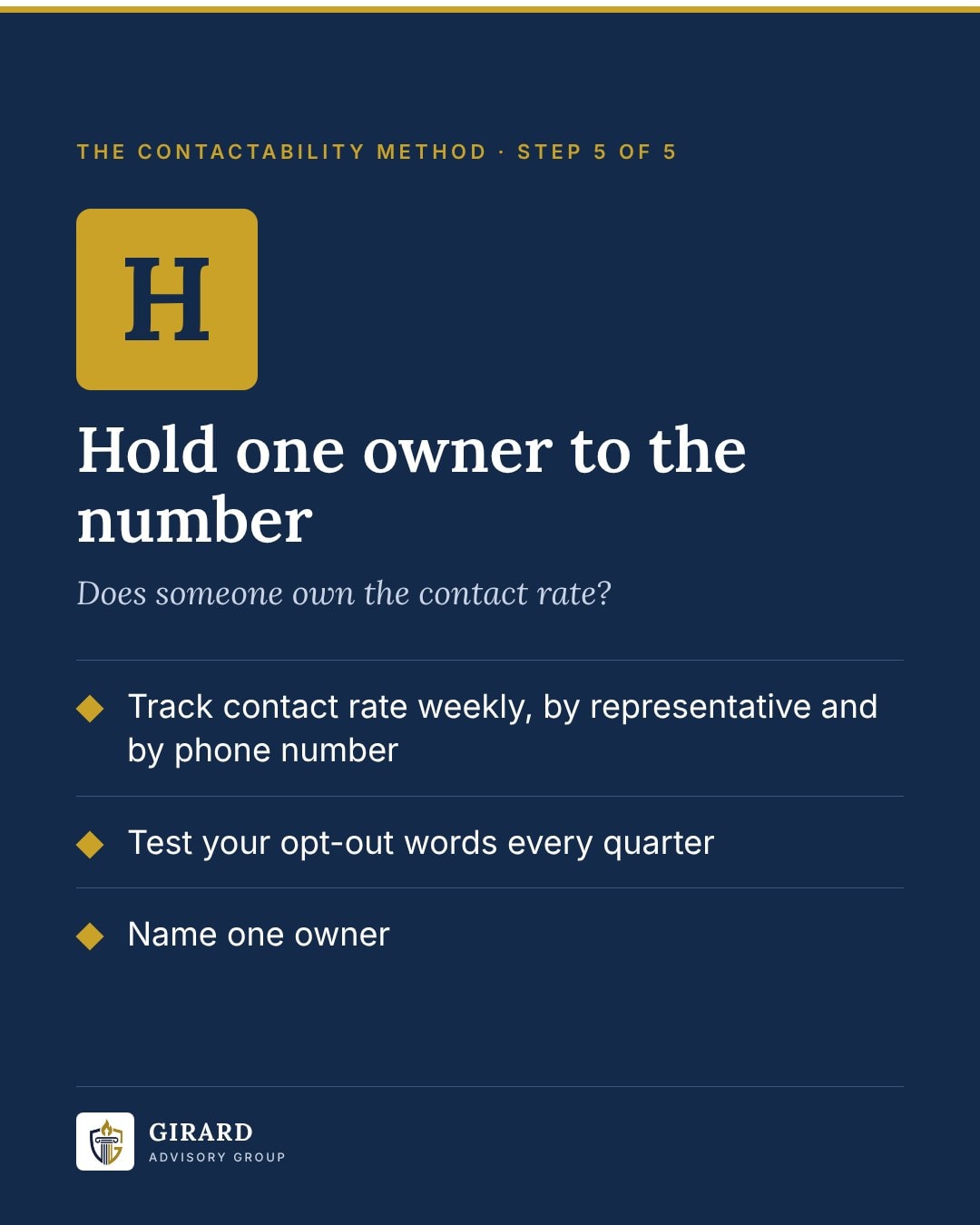
None of the first four steps holds without a number and an owner. Change the scorecard. Dials per day says nothing when most dials reach a filter. Track contact rate, reply rate to the first text, and time to first response, by representative, every week. Look by phone number and by carrier. If one number or one carrier sits far below the others, a label or a block is the likely cause. Test your opt-out. Reply to your own texts with stop, quit, end, revoke, opt out, cancel and unsubscribe. Confirm each one works and is honored in every system. Name one owner. Contact rate usually falls between marketing, admissions or sales, and IT. When it belongs to everyone, nobody calls the numbers to see what the prospect sees.
Score yourself
The Contactability Scorecard has fifteen checks, three for each step. Score each one 0 for no, 1 for partly and 2 for yes.
| Total | What it means |
|---|---|
| 24 to 30 | Getting through: prospects can recognize you, and your first contact reaches them |
| 15 to 23 | At risk: filters are costing you contacts you paid for |
| 0 to 14 | Filtered out: most first attempts are not getting through |
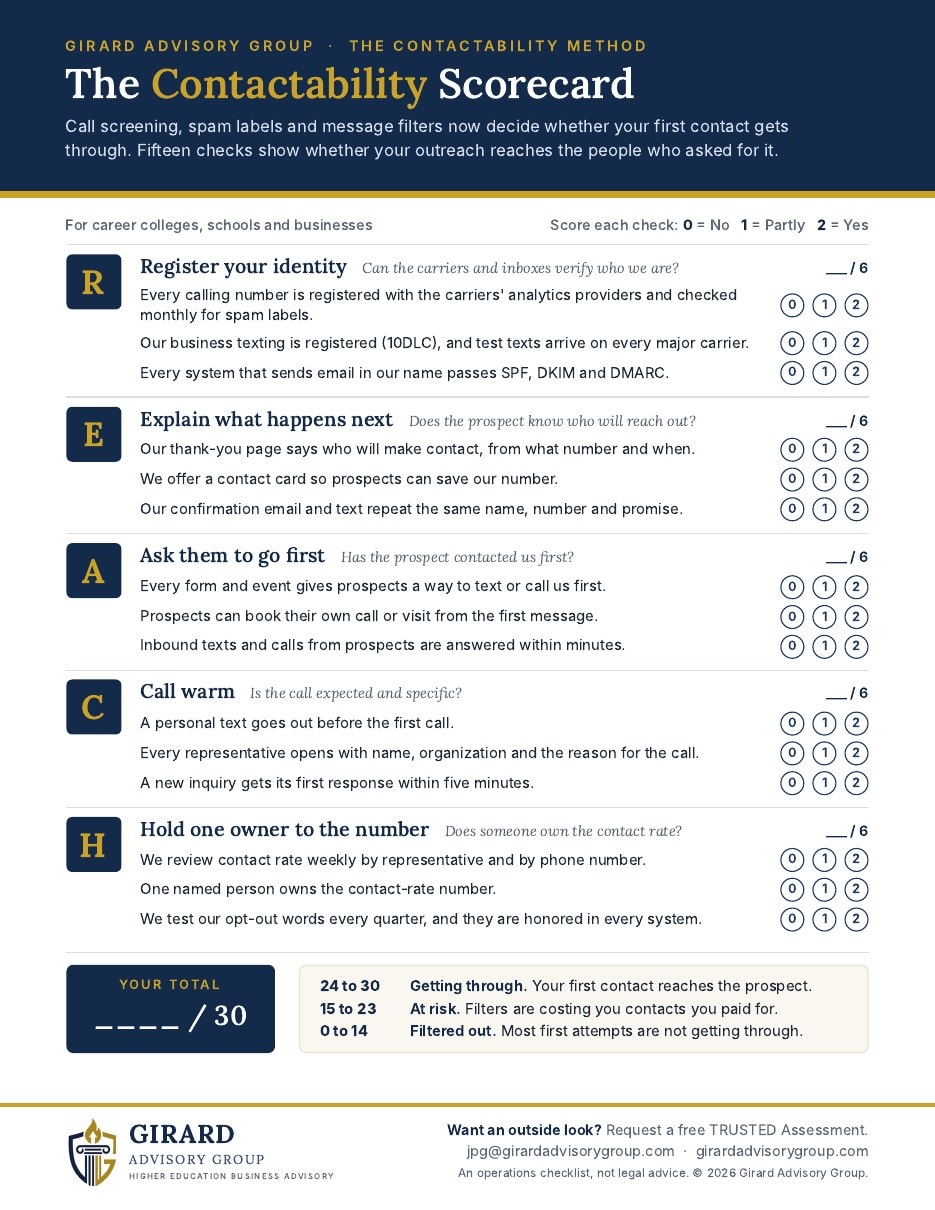
Download the one-page Contactability Scorecard — fifteen checks, five minutes, one clear picture of where filters are costing you contacts.
Download the Contactability Scorecard (PDF)
If you do only one thing this week, call a personal phone on each major carrier from every number your team uses, and write down what the screen shows. Most leaders have never seen what their own organization looks like on a prospect’s phone.
Girard Advisory Group offers a free TRUSTED Assessment to career colleges and businesses. We review how you appear to a prospect, from the first search to the first response, and send a written summary of what we found. Email jpg@girardadvisorygroup.com to request one.
Frequently asked questions
- What is the Contactability Method?
- The Contactability Method is a five-step process developed by Girard Advisory Group for reaching prospects in an era of call screening and message filtering. The steps are: Register your identity, Explain what happens next, Ask them to go first, Call warm, and Hold one owner to the number. It applies to colleges and to businesses.
- Why are my calls showing as “Spam Likely”?
- Carriers score calling numbers on behavior: high volume, low answer rates, short calls, and blocks or reports from recipients. A legitimate number can earn a label through heavy dialing alone. Register the number with the carriers’ analytics providers, reduce volume on it, and ask for a review if it is mislabeled.
- Does iPhone call screening block business calls?
- No. When a user turns the feature on, the phone asks unknown callers for a name and reason, then shows the answer to the user, who decides. A caller with a clear, specific reason can still get through. A number the person has saved or contacted first is not screened.
- Do I need to register to text prospects?
- If you text from a standard ten-digit business number in the United States, yes. Registration is called 10DLC. Unregistered business texts are blocked by the major carriers, usually without notice to the sender.
- Do the email rules apply to a small school or business?
- The strictest requirements apply to senders of about 5,000 or more messages a day to a single provider. Authentication is expected of every sender, and it protects your domain from being impersonated, so it is worth doing at any size.
- Is local-presence dialing still a good idea?
- A consistent local number that prospects come to recognize helps. Rotating through many local numbers to appear familiar now hurts, because new numbers have no reputation and are labeled quickly.
- Should we stop calling?
- No. A conversation is still where an enrollment or a sale is decided. What has changed is the order. The call works when it is expected, and it is expected when a text, an email or the prospect’s own first message came before it.
- How do I know whether filters are costing me contacts?
- Compare contact rate by carrier and by phone number. If one number or one carrier is far below the others, a label or a block is the likely cause. Then call your own numbers and see what the screen shows.
Sources
- Hiya, The Definitive Guide to Caller ID Reputation, citing the State of the Call 2026 report
- Twilio, What Businesses Need to Know About iOS 26, updated November 2025
- Telnyx, What is 10DLC
- Red Sift, 2026 guide to Microsoft, Google and Yahoo’s bulk email sender requirements
- Brownstein Hyatt Farber Schreck, New TCPA Revocation of Consent Rules Take Effect on November 25
- ActiveProspect, Understanding the FCC one-to-one consent rule update
- Olshan Frome Wolosky, Texas Telemarketing Law Expands to Include SMS/MMS Messaging
- Caylor Solutions, summary of the 2026 Enrollment Engagement Report
Explore Topics
Written by
John P. Girard
John P. Girard is the founder of Girard Advisory Group and a thirty-year veteran of career and proprietary higher education, with hands-on leadership across enrollment growth, campus operations, accreditation and compliance, curriculum development, brand and marketing, and P&L management. Over three decades he has held roles spanning Campus Director, Campus President, Regional Campus Director, and National Director of Marketing & Digital Media Brand Management, leading multi-campus organizations through growth, accreditation, and operational turnarounds. That range — from the admissions floor to the boardroom — is what shapes his advisory approach: strategy that has to hold up in daily campus operations, not just on a slide. John holds a Master's degree in Teacher Education from the University at Albany, SUNY, and has served on the Board of the Ohio-Michigan Association of Career Colleges and Schools.